Fundraisers and Wholesale
How Wreath Fundraisers Work
Follow a wreath fundraiser from sign up to sort day: the sales packet, order taking, payment, delivery and the margin a group keeps.
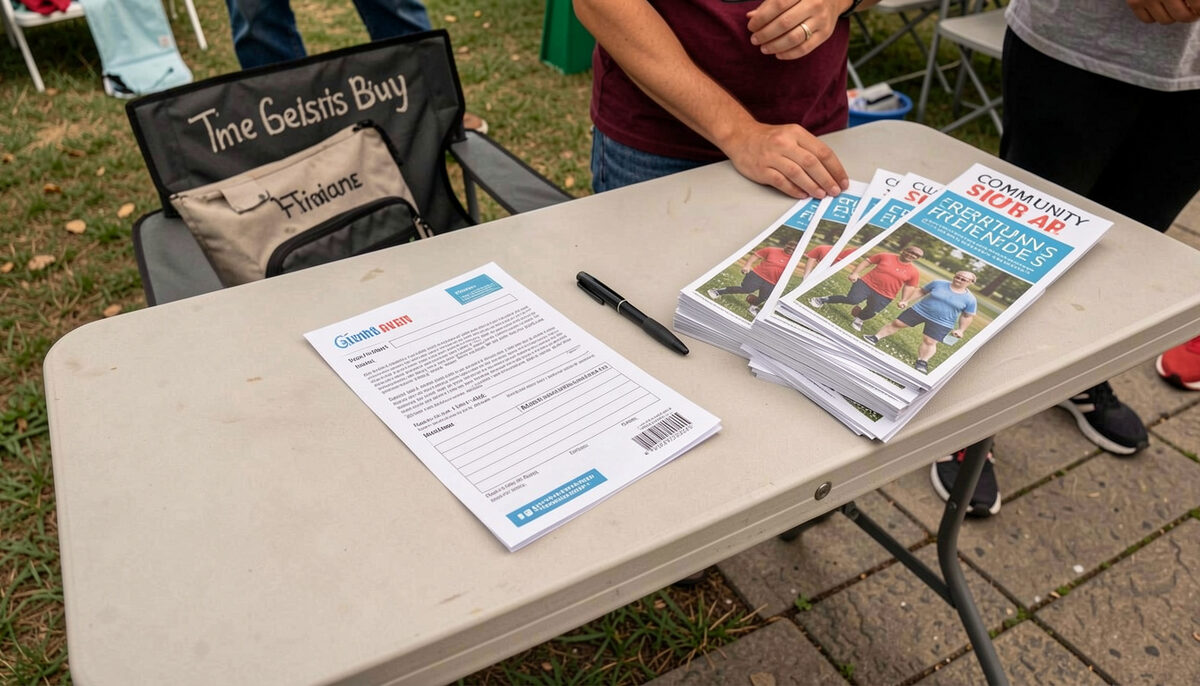
A wreath fundraiser looks simple from the outside: a group sells greenery, the greenery arrives, the group keeps the difference. In practice it is a short project with a fixed calendar, a handful of decisions, and a few places where groups commonly lose money or goodwill. This guide follows the whole cycle, from the first agreement to the last box leaving the sort day.
Step one: choosing a programme
A group begins by choosing a supplier that runs a fundraising programme. Most programmes provide a sales packet, a price list, an order form and a delivery date. The two numbers that matter are the price the supporter pays and the price the group pays, because the gap between them is the group's earnings. A programme with a wide gap but a poor delivery record will disappoint supporters, so reputation matters alongside margin.
It is worth asking the supplier three questions before signing: what is the last date to submit the order, when will the greenery be delivered, and what happens if a piece arrives damaged. A programme that cannot answer those clearly is a risk for a first time group. The wholesale side of the trade is described in wreath fundraisers and wholesale.
Step two: recruiting sellers and setting a goal
The campaign runs on sellers, who are usually members of the group. Each seller takes a book of order forms and a target number of pieces. A realistic target is what matters: a seller who is asked to move twenty pieces may not try, while one asked for five will usually manage it. The group's total is simply the number of sellers multiplied by the average per seller, and setting that expectation honestly at the start avoids disappointment at the end.
Good campaigns give sellers a simple script and a photograph of the product. Most supporters buy because a known person asks, not because of the product itself, so the seller's effort is the engine. A group that treats the campaign as a competition between sellers, with a small reward for the top seller, usually sees a higher total.
Step three: taking orders
Orders are recorded with the buyer's name, the item, the quantity and the payment. Paper forms still work well, and they have the advantage of being familiar to older supporters. Digital ordering is faster for some groups but adds a step when the orders have to be consolidated. Either way, the order book has to be legible and complete, because the sort day depends on it.
Payment is collected at the point of sale in most programmes, which means the group holds the money before it pays the supplier. That is simpler and avoids chasing debts after delivery. It also means the group has to keep the cash safe and reconcile it against the order forms, which is a job for one named person rather than for everyone.
Step four: consolidating and submitting
Once selling closes, the group adds up all the order books into one order and sends it to the supplier before the deadline. This is the step where errors are most costly, because a missed deadline can mean no delivery at all. The consolidated order should be checked twice, once for the item counts and once for the money, before it goes.
The group also confirms the delivery address and the sort day at this point. The supplier ships to one address, so the group needs a space big enough to hold the delivery and a team ready to sort it. A school hall, a church basement or a covered car park all work. What does not work is a delivery with nobody to receive it.
Step five: the sort day
The sort day is the visible part of the campaign. Cases arrive, volunteers open them, and the greenery is matched to the order forms. Wreaths are laid out by seller so each seller can collect their supporters' orders in one pass. Swags and garland are grouped the same way. The whole event usually takes a few hours with enough volunteers.
Two things make a sort day run well. The first is a clear layout, with a table per seller and the orders already printed. The second is a plan for the greenery that is left over, whether because a buyer did not collect or because an order was counted wrong. A named person should handle those cases on the day rather than weeks later.
Where groups lose money
Losses come from three places. Under ordering on popular items means turning away a sale that was already made. Over ordering on unpopular ones leaves the group paying for stock it cannot sell. Failing to collect payment before delivery turns a simple fundraiser into debt chasing. A group that watches those three things protects its margin.
The margin itself is set by the programme, not by the group, so the way to earn more is to sell more pieces, not to negotiate harder. That is why the calendar and the pricing deserve attention before the campaign starts. Both are covered in wreath fundraiser timeline and pricing. If you are buying for yourself rather than running a campaign, start with choosing, giving and caring for a wreath.
Keeping volunteers
The people who run a wreath fundraiser are almost always volunteers, and the campaign is one of several things they are doing that month. A programme that asks for less, not more, is the one that gets repeated. That means simple order forms, a single submission date, and a sort day that finishes in a few hours rather than a whole weekend.
Groups that run the campaign well often keep the same coordinator for several years, and the coordinator's experience is the group's biggest asset. Recording what worked, and what did not, is the cheapest way to protect it.